Showing posts with label derby philosophy. Show all posts

Monday, 10 March 2014

Derby and race: 1. The whiteness of derby

So, as I outlined in this entry, I'm going to be looking at a couple of interrelated issues about race in roller derby. To start with, we can ask whether derby is predominantly white, and how that came about.

I think that, very roughly speaking, roller derby is a very "white" sport. That is, the vast, vast majority of people in the derby community seem to be white, although of course there are exceptions. Here are some of the team photos for the WFTDA teams that played at the championships (minus Gotham's, which I have already posted in the introductory entry):


  ...And you get the idea. 

They're predominantly white. Even Angel City, which of all the leagues' locations has the highest minority population, is made of up mostly white skaters. Notice, firstly, that all of these teams are either in the US or UK. I started looking down the WFTDA rankings for any teams ranked that were not from a western country, but I couldn't find any (although admittedly the list goes to 175 and there are plenty of non-WFTDA leagues out there, and given the stringency of the WFTDA membership process the lack of non-western WFTDA leagues might just suggest that leagues in non-western countries are not on the WFTDA wagon for some reason or another).

At my own league, there are what, 2.5 minority people (by which I mean, people who don't identify as white). Of course, I don't know if that's a good example though because hey, we're in southwest Virginia. But I've also skated in San Francisco, Santa Rosa, Melbourne and Canberra, and even though those places have more diversity among their populations, most people who do derby are still white. There's some variation though, so there were more Asians and Latina skaters in California, but it's still predominantly white.

Now here's the kicker: why is this the case? Why is derby so white?

A lot of discussion has been generated by this question at Elektra Q Tion's blog entry here, and there are several explanations provided. I'll touch on some of these below.

Visibility: One contributing factor which explains the ongoing whiteness of derby is that derby is seen to be white. What race you are is very, very visible in most cases, so you can see who is of a race similar to you almost right away just by looking at people.

And therin lies the problem. Suppose I go to practice and I'm fresh meat, and I don't see anyone like me. Maybe I will feel like I don't fit in, especially if there aren't that many other FM with whom I can otherwise connect to. Or I look in FiveOnFive or on DNN and see very few people that look like me. I don't know how much this really factors into it, but I've seen similar arguments made to explain the gender disparity in certain parts of academia. (For example, here's an article about the problems of visibility and academia.) The general idea is something like this: if I don't see people that look like me, I'm not going to connect as well or be as inclined to stay in derby.

As a result, the whiteness of derby also self-perpetuating in this way. If I am a minority skater and didn't feel like I was fitting in or relating well to the people around me, I might not stick around in the league. And then that'd make minorities less present, so that other potential minority skaters would also see less minority skaters in the league, and therefore be less inclined to stay, and so on.

(Elektra talks about this in her blog and in her post, Paris suggests that the minority skaters on a team have a responsibility to act and go out there and be visible. I'll talk about this in a few weeks' time when I talk about the role of minority and white skaters.)


Socioeconomics: There are some cases where we might have reason to think that race and socioeconomic status has a correlation. In particular, there is some good evidence that there is a disparity in the median net worth between whites and blacks (although the study I'm looking at only looks at the black/white difference; it might be interesting to see where Hispanics, Asians and Native Americans fit on the scale.

Here's a graph of wealth distribution across races:


Source: 2010 Survey of Consumer Finances

As you can see, even the wealthiest black and Hispanic families have much less wealth than white families, even when you compare blacks and whites within the same income groups. (Even in the bottom quintiles where you can barely see the wealth distribution, the white groups still do better.)

If we accept that there is a wealth gap between races, that might explain why we see fewer historically-poor races being represented. Derby gear is expensive! If you have a limited amount of money, then cost of gear and skates and league membership would have a higher likelihood of trading off against other things, like rent, student loans, groceries or whatever. Plus there are additional costs in things like travel costs on the car (gas, repairs, etc.) as well as time taken away from when one could potentially be working to earn more money.

Fresh meat packs run for several hundred
dollars usually. (And then there's also the
need to upgrade gear after a few seasons.)
Socioeconomics doesn't explain the race gap completely, though. On a small scale, leagues do often help with loaner gear or setting up payment arrangements for members who can't cover their membership dues right away. But if the wealth gap is something systemic, then the small-scale remedies might be of little help in changing the overall face of derby.

There's a similar argument for why ice hockey is so white; it's because a lot of historically poorer areas with minority kids didn't have access to rinks or equipment. (Football is also expensive, but schools will often provide gear.) And then, there's a lot of travel that has to go on since rinks are less common than fields or basketball courts. So parents would have to be free to drive their kids around further to practice, and at times that can impinge on work times.

So, by extrapolation, maybe that goes some way to explaining the whiteness of derby. One difference with derby is that it's mostly played by adults who can drive themselves, but with the advent of junior derby we might have another wave of whiteness coming in the next few years.

Blatant racism: And then one thing that might explain the whiteness of derby is when stuff like this still happens in other predominantly white sport, like hockey:


If you are a minority person, there's already enough difficulty with everyday racism, so why would you want to be subject to overt racism as well? I don't think that derby is as subject to outright racism as much as professional sports are (just because of the smaller scale on which leagues operate on), but racism isn't just contained in sport, and the potential for this would be pretty much a turn-off.

Next on race and derby: If (as I outlined at the beginning of this article) that pretty much all of the WFTDA leagues are western, then how does this affect the development of derby worldwide? I'll look at the the impact of culture on derby in non-western countries, and see if there's something about derby culture that lines up with western culture.

Friday, 28 February 2014

Derby and Race: a 6 (or so)-part series

Over the next few weeks I'm going to explore the relation between race and roller derby. This was prompted by an interview I did with the lovely RayWoWW when, as a follow up question, she asked me, as a nonwhite person, what I thought the role of race in derby was. I ended up writing her a giant text wall of an email back, and I realized as I was doing it that there were all these issues that I couldn't really resolve for the purposes of telling her what I thought about race and derby.

Part of the reason that I'm interested in this is, obviously, because I'm a member of a racial minority. But at the same time, this semester I'm also teaching an awesome class on the Philosophy of Race and Gender, and it is really making me think about this stuff in my spare time. It's weird to just think about concepts like white privilege, for example, independent of any context. But then applying race theory to practice also brings out some interesting results.

Now, I know that there is an amazing blog entry by CRG's Elektra Q Tion on why derby is such a white sport. I think this is a really big contribution to the dialogue on race and derby, and what I'd like to do is build on some of the things that came out of that discussion, in addition to some other thoughts that have been rolling around in my brain.

Here's an example. New York City is a pretty racially diverse place, right? Well, here's a picture of Gotham's All-Star team from 2011:


And here's one from their 2013 team:


Hmm. So there are a few changes, but it still looks predominantly white. Why? I'm not asking that derby teams have to be proportionate to the diversity in the city's population, but what is it that makes nonwhite skaters less inclined to make the team? This might not be a problem, depending on how we think about the issues. I'm not sure what I'm going to be looking for here, but I think there are a LOT questions that need to be asked about what happens when race and derby collide.

So, in the next few weeks, I'll start where Q left off with asking about why derby is so white. But maybe that only works because whiteness is the norm, overwhelmingly, in western culture, where derby is predominantly played. So then another question comes up: what's the relation between derby and nonwestern culture? Does the role of gender and cultural norms have anything to do with it? And if there is a problem with racial underrepresentation in derby, what obligations do skaters (minority or not) have to make derby more diverse?

And down the rabbit hole we go...

Friday, 6 September 2013

The Lurby Circle

When I started at VDL, Pitts (who was then-President of the league) introduced a new term: lurby. It's supposed to be some portmanteau of "derby love". I'm not a huge fan of the spelling but whatever, the idea is that you have love not just for roller derby itself, but those who play it, and those who enable you to be able to be part of it.

Sometimes we all need a bit more lurby. Every league goes through some drama where there's some internal squabbling over something or another. But in doing so we sometimes lose sight of what matters, and then people get angry and frustrated, and then they cry and walk away.

I've already written a whole giant blog entry about derby drama. I'm not going into that again. But when I was recently back in Australia and skating with VDL, I noticed that they had a new tradition to counteract the problems that came with politics and drama. Basically, at the end of each practice session, all the skaters--regardless of their skill levels or who they were--sat down in a circle while they were taking their gear off, and each went around and said who they had lurby for based on that session. So you might say that you have lurby for a freshie who has just nailed a new skill, or for a coach for an awesome session, or whatever it is. But it was a good way to bring everyone together at the end and just refocus on the important stuff, which is the fact that we are all in it together.

P.S. The awesome Derby Love ring showed above is available at I heart roller derby. Squee!

Wednesday, 27 February 2013

Apparently derby isn't a proper sport, still

So last night, the awards ceremony for the best female athletes in Australia took place in Canberra. I remember voting for this: basically, there was a poll open to the public to name the best athletes (across any sport) in Australia, in an attempt to boost the profile of women in sport.

The top 25, and an article about it, is here. There are a lot of good athletes--Australia does have a very strong sporting presence--but what is notable is that ShortStop (who was voted MVP of Team Australia at the Roller Derby World Championships last year) won the popular vote, but didn't even make the top 25. Her name is in the "and here are the other people who got voted on" bit at the bottom of the article.

Shorty at Blood and Thunder, with the other MVPs
Of course, the women who did make the top 25 are fantastic athletes--they are world champions, Olympians, superstars in their own right. I think that they certainly deserve to be up there. But what pisses me off is that Sports Hydrant, the organizers of the event, put this to a vote, and then "moderated" the result. I also like how the reporter for the article describes the potential result that a derby girl could have won the popular vote as "alarming". Really? What's the point of asking the public to vote, if you don't care about the result they will give you?

What this suggests to me is that roller derby is still not seen as a legitimate sport. Even though it's clearly really popular (and certainly more so than, say, shooting paralympics which made the list), there's still something it is lacking before it will be recognized as a sport in its own right. I have no other explanation for why such moderation had to take place, but then I wouldn't know what was going through the minds of the organizers.

Consulting other halls of fame and sporting records (as the organizers did) disadvantages roller derby, which does not have an Olympic presence (most of the other sports listed do), or at least have a well-established championship. Blood and Thunder--the roller derby world championship--is only a year old. Of course, the current reincarnation of sport itself is also relatively new. But it is a sport. It demands just as much athleticism, strength and strategy as any other sport on that list. What else needs to be done to show that it is a legitimate sport, and not just some random passing fad?

I honestly don't know what justifies taking Shorty off the list. CRDL is the most successful sports team to come out of the Australian Capital Territory. Team Australia got congratulated in parliament by the Prime Minister for their performance at Blood and Thunder. I also don't see the point in trying to boost the profile of women athletes if you take one of the most popular sports that there is for women, and publicly strike down one of its most successful players from a list of the top female athletes in the country, in the one sport that has been primarily developed by women, for women. I think it's extremely disappointing that this happened, but in a way I'm not surprised that it has. I just don't know what else needs to be done for derby to get the recognition that it should have.

Update: Okay, according to this article, it's the fact that people wear fishnets and have derby names that makes it not a sport. Really? Try telling a boxer that boxing is not a real sport because they wear little silk shorts or have nicknames for when they are in the ring.

Thursday, 16 August 2012

Does size matter?

Today I was at my faculty orientation for the new job, and we had to do a boring thing where you go around and introduce yourself and then say something interesting about yourself. (Sidenote: academics REALLY like that pedigree shit; everyone was like "I'm so and so and I did my Ph.D. at such and such university" or whatever.) Obviously, for my interesting fact, I said that I did roller derby. Some people laughed; others just looked surprised or confused. Whatever, that's not a weird reaction at all I guess. Then, later in the day, a woman (who was probably in her mid-30s) came up to me and was like, "Aren't you a bit small to be a rollergirl?"

I'm sure she meant well, but what the fuck?

I'm about five feet tall. Maybe 5'0.5" on a good day. But until this point, I wasn't aware that there was a particular size and build that people who do derby. Maybe she was just thinking that women who do derby are giant amazonian behemoths who can crush walnuts with their thighs or something. Maybe she thinks they're the kind of women who kill men by Snoo Snoo. But whatever it was, I was kind of taken aback.

I didn't really respond to the question except to probably smile weakly and say "no", and then I was trying to think of something else to say. Okay, so people make assumptions about all sorts of things all the time. Maybe I should have told her that one of the reasons I liked derby was because it didn't require people to have a particular size or build to do well; hell, I thought any team in their right mind would want a combination of skaters of different sizes, because differet people can do different things. Isn't that what the all-inclusive spirit of derby is about? For example, check out the infamous video of Rice Rocket taking a ride on Beyonslay:


Surprisingly, I'm not just posting this video for the "WOW, HOLY SHITBALLS" factor.

Obviously, there is a sense in which size does matter. If it were the other way around, I seriously doubt that there'd be any youtube videos of Beyonslay taking a ride on Rice Rocket without crushing her. Beyonslay is clearly great at what she does, which is blocking the shit out of the incoming jammer (after all, she's the "shark/power blocker" in that play), and she knocks RR out a few times before the ride in the full video of the jam. Likewise, RR is a great jammer and uses her size and speed to get around the rest of the pack with more or less no problem. So there, it looks like size is important, in some kind of role-specific sense.

But then, there's another, broader, sense in which size doesn't, or shouldn't, matter. If you had a team of all Beyonslays or all RRs, well, I think that'd be an interesting bout to watch. Most teams will put a combination of different skaters in, to optimize their abilities and whatnot. Having people with different abilities based on different sizes is one way you don't put all your eggs in the skill basket. That said, it'd be interesting to see how derby strategy develops if a team was all made up of tiny skaters who could skate five abreast and not touch each other or something, or a team of all really large women who could booty block the entire track or something.

But that can't even be true. What you can do in derby isn't contingent on what size you are or what your body build is. I mean, okay, maybe people who are bigger and heavier can take out smaller people more easily, but that's not even a given:

(Photo: LRR)
That's London Rockin' Rollers' Murder Urs taking out a blocker who is pretty much twice her size. Ans she's doing a fucking good job of it. So it's not like big girls have a one-up on little girls by default. (Also, she's little and blocking! As much as I like jamming, I get a bit bleh at the assumption that little girls jam and big girls block, and there's no in between. Also I think I think this because I'm not very good at jamming.) But yeah, so size doesn't seem to matter here.

Finally, it's not even that you have big girls and little girls. Derby skaters come in all kinds of combinations of height and build and ass-sizery. I don't have a skinny ass. Hell, my butt pretty much starts right at the bottom of my ribcage and goes to my knees or something in a continuous ass-and-thighs-in-one-thing. It's not mega huge either though, even though I can pretty much leg press Ze Boyfriend (and he weighs almost twice as much as me). So you might think that if size matters, it's size where that matters. But I'm not sure it does. Also, the twelve-year-old boy mentality in me is tittering a lot at talking about size and where.

But I can't get over the fact that said lady at my work orientation even made the comment at all. Is it because I'm short, that she thought I must be likely to be crushed to death by women bigger than I in derby? (Okay, muntings aside, really.) Or maybe she's just thinking about whatever impression of derby she's got, like from Whip It or something, but even then, that can't be right.

They all look more or less the same height and build.
Also, I am seeing a distinct lack of derby booty.

Or maybe I am taking this out of context and she just wanted to have a friendly conversation with me, and I am a socially retarded idiot who is taking this too far.

Saturday, 28 April 2012

A bunch of goodbyes

Derby tourism can be hard. You go visit a league, and the people there are awesome and wonderful and you feel cruddy when you have to leave them.

The last time I laced up my skates for training was about two weeks ago. On that Sunday, I went to BAD training. It was really good, Hammer and Lucas put us through a bunch of drills: monkey bars, weaving with partners, and this awesome fun partner blocking drill. Basically, you have two blockers and a jammer, and 3/4 of the track to stop the jammer getting through. For some reason, the drill had 4-5 people jam continually, and everyone else rotated as blockers. I got to jam for like an hour. It was pretty fun, I tried to jump the apex but I think my legs keep crashing into the person I'm passing, and then Hammer threw another skater at me to get all in my way. Haha. But anyway, at the end of training I mentioned to a few people that I would be leaving soon, but that next week would be my last one. However, Hammy wasn't going to be training us next Sunday, so when we were leaving BAD HQ I told her I was going and thanked her for all the stuff that she had taught me, and then she gave me a big hug. I'm enough of a fangirl to be like "Eee! Hammer sweat!" but yeah, she's an awesome person and a great teacher.

Then, on Monday I went to SCRD. Now, I really have a soft spot for SCRD. They're still growing as a league, and because they're much smaller a league, their community feels a lot more tightknit. It was a hard training session (although no scrimmage, boo) and at the end I said that this was my last one. There were hugs all around.They also gave me a SCRD shirt. There's one particular skater who's still a newbie, but I've been informally mentoring her (read: giving advice on wheels, skates, bandaging ankles, not to give up because training is hard, and whatever) and it has been really good to see her develop as a skater. I'm keeping in touch with her because I'm excited to follow her progress; her enthusiasm for derby is really contagious and she's really thrown her heart into the sport.

Anyway, then it turned out that I couldn't go back to BAD the following week because of the stupid I-have-a-giant-blister-and-can't-walk incident. That sucked big time, because I didn't get to see everyone and skate with them one last time. In particular, I wanted to thank Mindi and Lucas for the awesome work they put in every week to get our skills up, and say goodbye to the badass ladies I've been training with the last couple of months.

It is kind of shitty to have to say goodbye. I've never been good at them, and I never seem to get to say it to everyone that I should. But they're only temporary. The thing with derby families is that you can go anywhere and meet amazing and wonderful people and be part of their fold. You learn so much from them, and you become more than just people skating together--you become actual friends. And it sucks to leave your friends. But derby families are also tightknit, and when you go back it will be like no time has passed (although, of course, everyone's skate skills will have improved presumably). You'll skate together and hit each other and then go and have beers in the parking lot or at a nearby dive or whatever. And things will be all good. I guess the upside of the goodbyes is that there is also a corresponding "hello and welcome back" when that time comes, whenever that time will be.

Tuesday, 18 October 2011

The first rule of derby is...

Don't be a douchebag.

Nobody likes these things. Nobody.

No, really. I know this sounds obvious, but it's actually hard to stick to this rule sometimes. I guess with all the big personalities that it takes to actually do derby, plus the fact that it's an aggressive and dramatic sport, things can sometimes spill over or people will read things into offhand comments or actions when there was no bad intention there in the first place. There are little things that might be mildly irritating, but you push through them because that's what you need to do to actually do derby. But then those things escalate. And then, before you know it, you have a full blown league crisis on your hands. And nobody wants to have to deal with that.

Why does it happen? The douchebaggery phenomenon (as I'll call it) is partially sociological: A lot of talking goes on in derby (notwithstanding any stereotypes about its inevitability, given we are having large groups of women hanging out together). There will be communication problems: things get misconstrued and misinterpreted. Given the large number of people who do derby, it's also inevitable that you will have subgroups or cliques form. You will end up being better friends with some people than others. Hell, teams are an obvious instance of subgroups within a league, not to mention all the informal socialising-y groups that also will spring up.
Sheep can be bitches. (Photo: Martyn Peck)

However, I think part of it is also symbolic. Derby is all about inclusion, or at least it prides itself on being so. So maybe when someone feels like they are excluded or isolated from the rest of the group, then it becomes more hurtful than in situations where inclusiveness isn't such a big deal. Everything else being equal, it might be worse to be excluded from a group in roller derby because it's not just about not getting to skate, it's the fact that you're not getting to skate with a particular group of people. And so if it's more hurtful to do that, a natural response might be to resent the fact that this is happening.

Anyway, I'm not a sociologist or psychologist or anything like that, but this is all well documented. Interestingly it seems to happen to EVERY league that I have come across, to some extent or another. Bonnie D. Stroir blogged about it here, and Bunnie's got some nice offerings for how to deal with it here. And these are just the tip of the iceberg. Skatelog has a whole bunch of entries about different aspects of how to address conflicts within a league, and that sort of thing. I'm not sure how much I can really offer on this perspective, but here are a couple of ways of breaking down the "Don't be a douchebag" rule into some nice, tasty and easily-digestible chunks:

There is no "I" in "team", or "league" for that matter
Notice it says "we're", not "I'm".
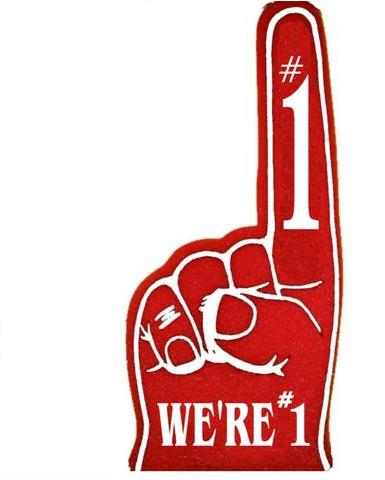
I often wish that you weren't allowed to have the number 1 for your derby number. For symbolic reasons, I don't think that any one individual should get to be "Number One", as it were. Of course, if your entire team wins something and then you are all collectively Numero Uno, then that's awesome, and good for you. But nobody should be in a position where they are more important than anyone else in the team. The whole point of being in a team is that you have an aggregation of individuals, where the interests of the team are supposed to be paramount (or else you just have a bunch of individuals skating around, not an actual team skating).

Everyone is a moral equal
This is often a hard one to remember. I think it's almost the converse of the previous point. Whities and freshies are just as important and valuable to the team as someone who's scrimmaging or on a travel team or is a captain or holds a committee position or anything like that. They are just as much a part of the league as anyone else, and should be treated that way.

But note: when I say that everyone is a moral equal, it doesn't mean that you have to treat everyone exactly the same. That would be stupid: it would mean throwing freshies into the deep end, or having sessions where scrimmaging skaters aren't learning anything. What I mean here is that everyone deserves equal respect for their skating ability and their capacity to learn and grow as a skater. The weakest skater in your pace line isn't dead weight; she just needs more of your support, not more of your yelling. If you can do backwards crossovers that's great, but realise that not everyone can, so have the time to give newer skaters pointers. The whities and freshies deserve just as much praise and encouragement for something they have achieved as someone who is drafted onto a team, even if that thing is a T-stop. What we sometimes need to do is just step back and see the skater as a person, not just as a particular rank or skill level. In short: equal respect, and equal consideration. 

The only round things in derby should be wheels.
Shit happens
Sometimes you just have a bad day. Deal with it, but realise that you are having a bad day and don't take it out on other people. Not everyone is psychic. They will not will know that you are having a bad day or what your problem is unless you tell them. (I'm guilty of this myself sometimes, but I'm trying to get better.) The fact that you tell them that it's only temporary will be something that alleviates the tension as well; you won't be seen as a mega-bitch who is constantly PMS-ing and people will actually be sympathetic if you talk about it. And maybe sometimes all you do need is to rant and get it all out. There are people who will, believe it or not, listen to what you have to say. Keeping things to yourself and letting them stew is an excellent way to lose perspective.

Remember your roots
As people become more advanced, they sometimes forget where they came from. Sometimes we don't understand why someone can't plow stop, or why they are complaining that their back hurts from being in derby stance for five seconds. But that's just because those things are second nature to us now. I think it'd actually be interesting for people who are of bouting level to watch some freshies train. (By "interesting" I mean "humbling" here.) We all came from the same place. Everyone had to learn how to skate at some point. For some people, that was twenty years ago. For others, it's last week. Remember that. Be patient.


Know when to shut up
Not part of team uniform.
There are a lot of people in a league. You won't be friends with everyone. By all means, talk to everyone and try to be friends with everyone, but you will inevitably gravitate towards some people more than others. Not a problem in itself. The problem is when you start bitching about people for something they did. If you have the balls to do it, say it to their face. Otherwise, don't say it at all.

This also goes more generally for having grievances about your league. If you have a problem, sort it out internally. Interleague issues are by definition just things to sort out within a league. Deal with them within your league then, obviously. But remember that you should keep an united front for the public to see. Dirty laundry doesn't help anyone, and if anything it might scare off newbies from joining if all they see is a giant shitstorm of drama in their faces.

Interpret charitably
Holy shit. I actually want this; it's a couch/punching bag combo.
A lot of comments get made. Some are nice, some are not. Some can be nice or not nice, depending on how you decide to take it. People can be passive-aggressive. But why not give them the benefit of the doubt?

For all you know, that facebook status update that says "I am having the worst day ever, everything sucks" isn't in relation to a poorly-made ref call or some altercation they had with you on the track. Maybe the person just found out they lost their job, or a loved one, or something else. Believe it or not, not everything is about derby.

Unless they say something like "OMG I hate [some particular person] because they did [some particular thing] at [some particular place] and [some particular time]", you can't be absolutely certain that their rant is directed at you. So don't think that all the ranty comments on facebook or whatever are about you or derby or the league, because they're not.

Finally, STFU & SK8
The best way to not be a douchebag is to just avoid the drama llama in the first place. If you see it brewing, take action to nip it in the bud before it blooms into a giant clusterfuck. If you're pissed at someone, talk to them about it. Then, if that doesn't work, skate out your rage. But complaining about shit doesn't help anyone. If you all realise that you are in it together for the love of roller derby, then keeping that shared goal in mind will help you overcome your obstacles.

Monday, 10 October 2011

"Dealing with" fresh meat

I've been posting on Skatelog, because it is an awesome resource for contacting other leagues and finding out how other leagues do things.

One of the discussions we are having there is about how leagues are "dealing with fresh meat". Now, I don't really like the term "dealing with"; it sounds like they're a problem or something. They're certainly not. But I found out that some other leagues seem to have a "tear them down" attitude where new skaters get yelled at if they can't keep up with the vets. Some leagues say that derby is tough, and so only the people who are sufficiently tough mentally (to withstand getting yelled at and so on) will make it in the game. Maybe a baptism of fire will work for some, but I don't think that is the right way to go, generally speaking.
I'd like to think that I was a T-bone. Or maybe a sirloin.

New skaters are important for leagues because they breathe new life into them. I mean, our league is pretty new as it is, but I think it's important to be dynamic in the league's personality and the direction that we want it to go in. I think that's important to nurture freshies because they are, whether we like it or not, necessary for the future of derby as a sport. You can't have roller derby being so popular if nobody does or supports it. That just seems to be obvious.

What people tend to forget is that fresh meat are simply people who are interested enough in wanting to do derby that they will go to a training session. If they are interested, then why treat them like shit and make them lose heart in something that we (as skaters) find to be one of the most awesome things that a human can possibly do? How would you feel if you were shit at something because you're new at it, and people were a dick to you for that? If anything, being nice to freshies is really a lesson in humility. We were all once shit skaters, and I'm pretty sure that the reason we stuck with it was because we were, whether we care to acknowledge it or not, encouraged by people who were better than we were. When you've got minimal skills, any acknowledgement of improvement is valuable.

I think it's important to give freshies the help that they need to develop into good skaters. We used to throw people in the deep end, and some of them would find it so difficult they'd be scared to come back. Nurturing them (without babying them, of course) lets them develop the skills and confidence that they need in their own time. In addition, including the freshies in off-skate bonding helps them stick with it too. I guess people who are freshies aspire to work harder to be whities and then yellows, because you can see people in your cohort move up, and you've already developed bonds with them and you'd want to move up too.


I really like my league because of how it treats the freshies. We seem to be friendlier than a lot of other leagues, and more supportive of our new members. I think the reason the league is expanding so quickly is simply because, besides training a whole heap every week, we have an open-door policy where people can just come and check out what we do whenever. Hell, I would know: I have to do the paperwork for new members, and we get about 1-2 new faces at each training session. And then there's the community. You might come for the derby, but you stay for the people who are there.